Within the Cru brand, we have a system of categories (including the Cru parent brand, products, programs, events, endorsed sub-brands, and partnerships) that foster flexibility and consistency as needed, for all our communications.
The primary aim of our brand architecture is to increase the awareness and equity of the Cru brand while providing flexibility for the audience-specific ministries.
The Cru parent brand sets the foundation for the overall visual identity system for any communications represented under the Cru umbrella. This includes the Cru brandmark, as a fixed asset, that applies to all of our ministries.
“Ministries” are defined as structured sets of activities designed to fulfill a particular aspect of Cru's mission (but intended to extend Cru's value and not compete with Cru from a brand perspective) in a particular context. Ministries are often focused on addressing a specific need in the community, providing direct support or resources, or driving change in a targeted area. (This term applies equally to entities across the org chart, from Campus or City to a local team or Immigrants, Internationals, and Refugees.)
The Cru visual identity guidelines provide numerous flexible assets (from color to pattern) to accomodate each ministry need.
Cru's leadership has approved some ministry expressions to adopt a unique visual identity distinct from the Cru Parent Brand, while remaining endorsed Cru ministries. These brands follow and adhere to separate brand guideline documents.
Within each ministry, there are various products and resources — books, podcasts, apps and curriculum — that benefit from a unique, stand-alone identity. They are produced by Cru, and need to connect to the parent brand, with the ability to be adapted with a name and logo for the benefit of a specific audience. However, they still must be visually connected to the Cru parent brand.
For example, Spiritually Fit, Boxes of Love, etc., would adhere to the Cru brand guidelines for color, type, and other visual choices.
Unique to this category is the ability to create a unique name and stand-alone symbol. This allows for the product to be adapted to a specific audience, much like a book, podcast, or other curriculum might.
These logos should adhere to the visual tools outlined in these guidelines (color, type, etc.). If a unique shape or symbol is needed, use simple, flat, geometric shapes to accompany the name. Additional product assets should consider leveraging the flexible assets.
Specific programs should be closely affiliated with the Cru parent brand. These efforts serve to increase awareness and affinity for Cru and should be clearly connected. Programs do not get a unique logo but do allow for unique names and titles. They should follow the Cru brand guidelines for all communications.
A structured set of activities is designed to fulfill a particular aspect of Cru's mission. It is intended to extend Cru's value and not compete with Cru from a brand perspective. Such programs are often focused on addressing a specific need in the community, providing direct support or resources, or driving change in a targeted area.
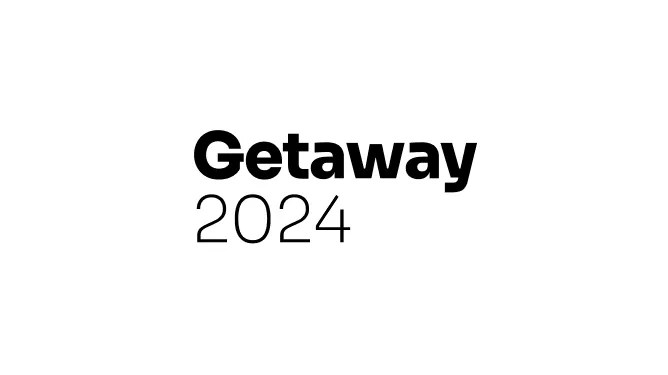
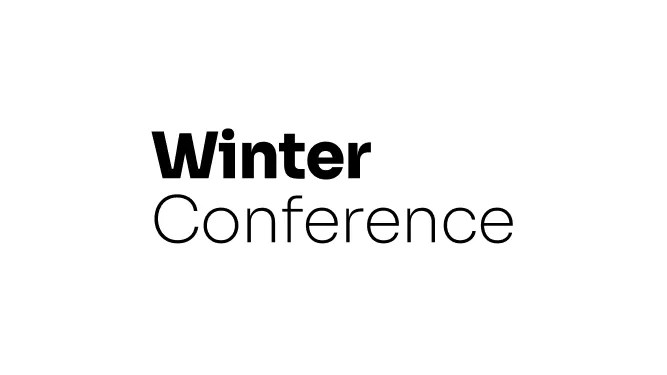
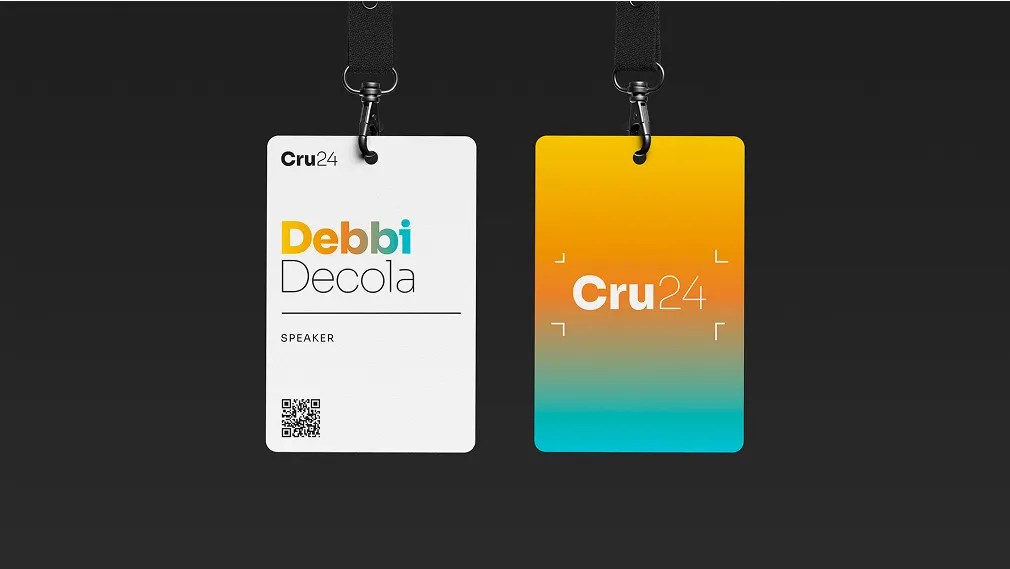
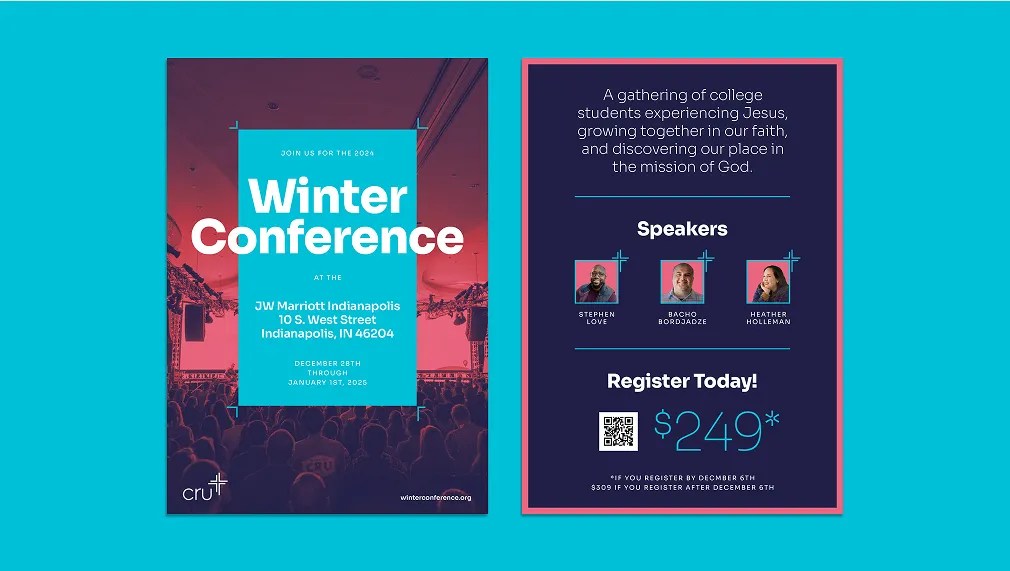
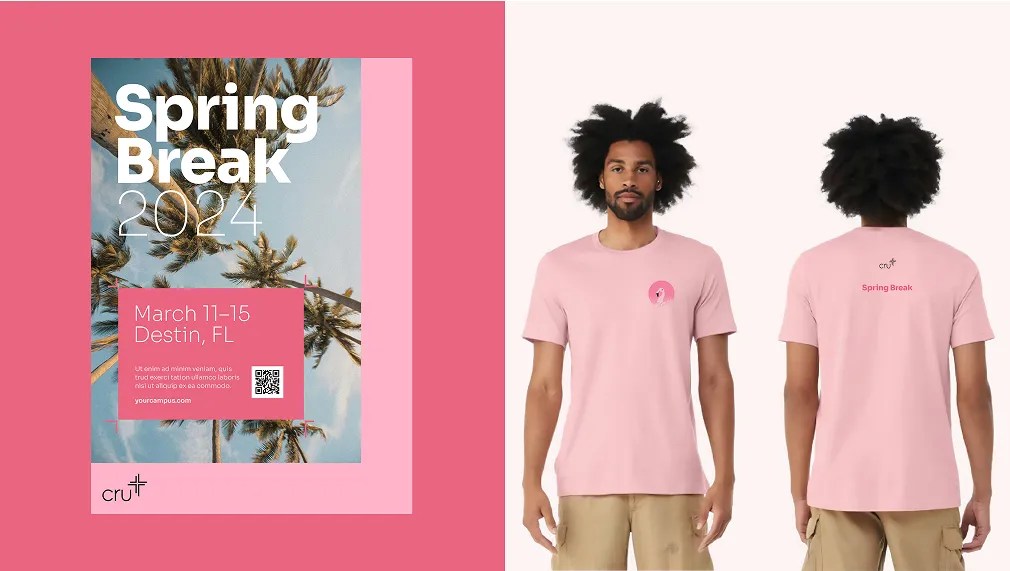
The event category includes virtual or in-person events that are Cru branded (conference, retreat, mission trip, fundraiser, etc.).
For event marketing and branding, our system allows for varying degrees of flexibility. Events need to feel exciting, relevant, and closely connected to Cru.
Leverage the Cru visual tools (fonts, colors, and logo templates) as outlined in these guidelines for all communications. While the logo templates offer some flexibility, avoid new stand-alone symbols to compete with our parent brand Cru logo.
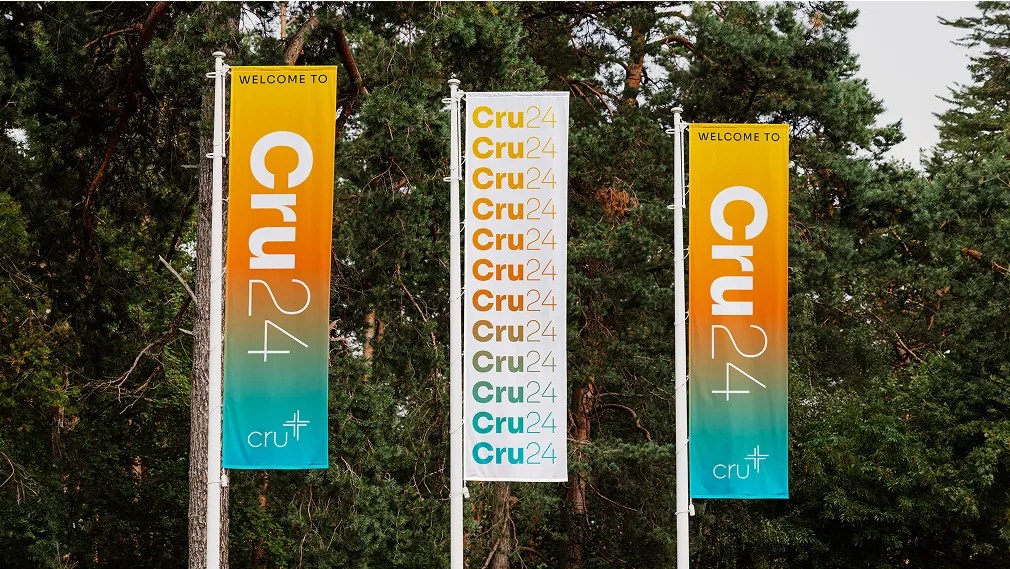
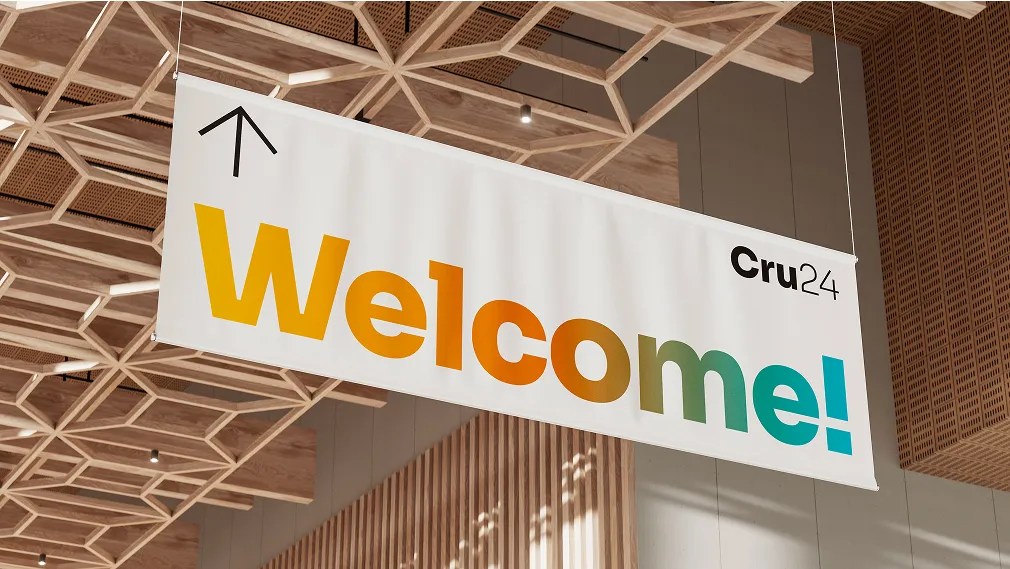
Events present a great opportunity to push the boundaries of the Cru look and feel. Using the fixed logo templates, brand fonts, and core colors, consider leveraging the flexible assets to keep events unique and relevant. Photography, graphic patterns, etc., are all available for creative exploration.
However, events should feel part of the Cru ecosystem. Avoid new motifs and designs that break from our bright, bold, and connected principles.
Event marketing and branding examples shown to the right are vision casting only.
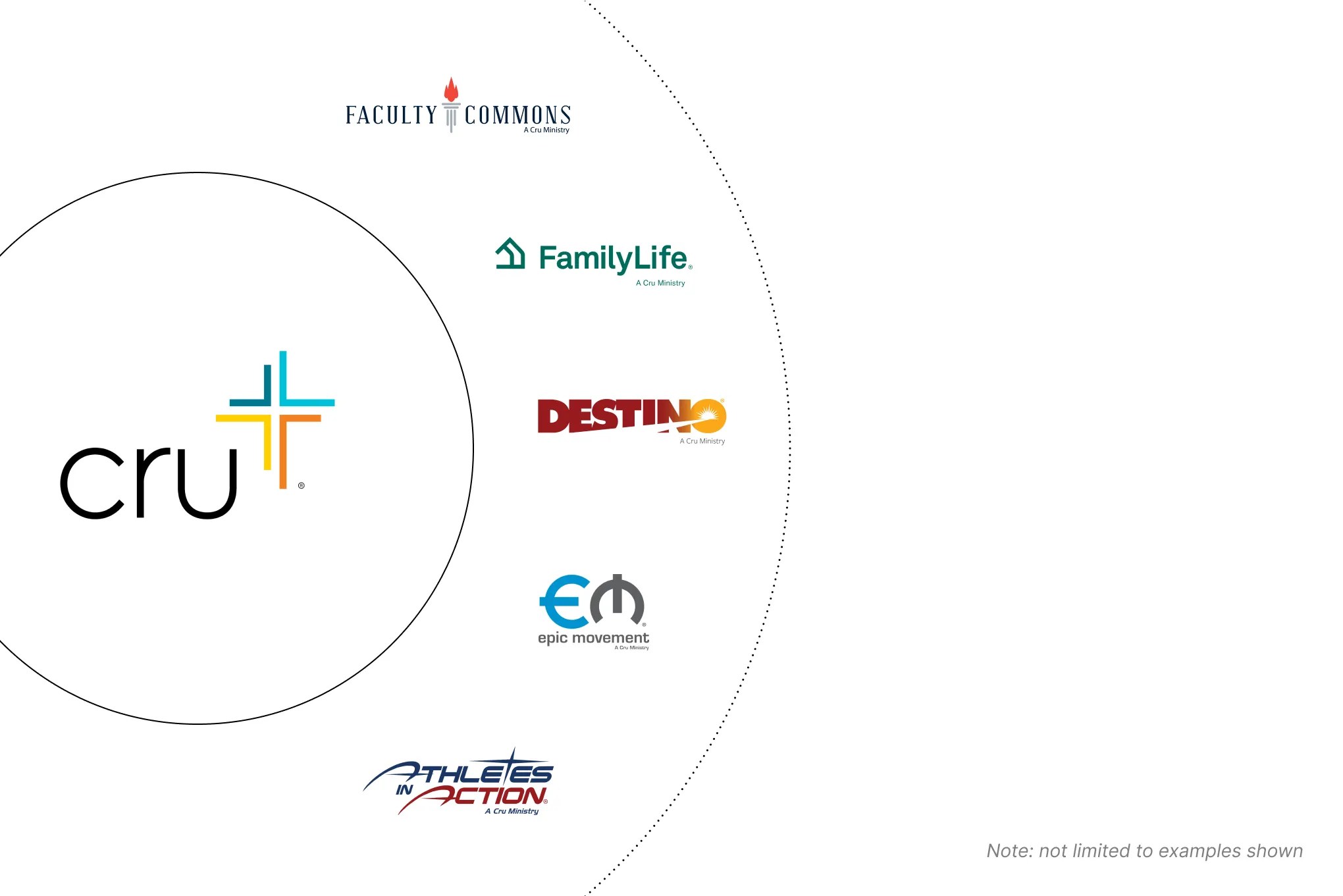
These are ministry expressions with unique names and visual identities intentionally made distinct from the Cru parent brand but still in the family. They may be overt or covert in their visual connection to Cru, but have separate visual identity systems and should follow their respective brand guidelines.
An endorsed brand should be overtly connected with Cru when possible. Only if safety or ministry effectiveness is in jeopardy should an endorsed brand feel covertly connected to Cru. Such decisions should be made in consultation with ministry leadership.
Overtly connected endorsed brands should use the Cru endorsement line and the brand guidelines for guidance. Fonts, color, and flexible elements help these endorsed brands feel part of the Cru ecosystem.
Covertly connected endorsed brands may claim affiliation through body copy (e.g., “Founded by Cru, X ministry seeks to…”) and are not required to use the endorsement byline.
New endorsed brands should only be considered when seeking to reach a distinct audience as compared to already existing audience strategies. If the endorsed brand or audience is duplicative, a new sub-brand should not be created. Ministry leadership must approve the addition of new endorsed brands.
If Cru engages in a joint venture with additional organizations or brands, those properties receive a partnership logo lockup.
These lockups leverage a simple divider line to distinguish the two separate brands in partnership together. Unique partnership logos or graphic assets should be avoided so as not to cause brand confusion.
While separate logos feel important for individual programs or audiences, they can cause confusion and a negative impact on brand equity for Cru.
As such, we only create new logos when they apply to a new product, resource, or sub-brand (connected or disconnected) that does not overlap with an existing sub-brand (in terms of audience and offering).
We do not allow for initiative, department, or program logos, as these would compete with our parent brand. Event logos follow a pre-designed type-only template.
Products, resources, or events should follow the brand guidelines for visual guidance and consistency when creating new logos.